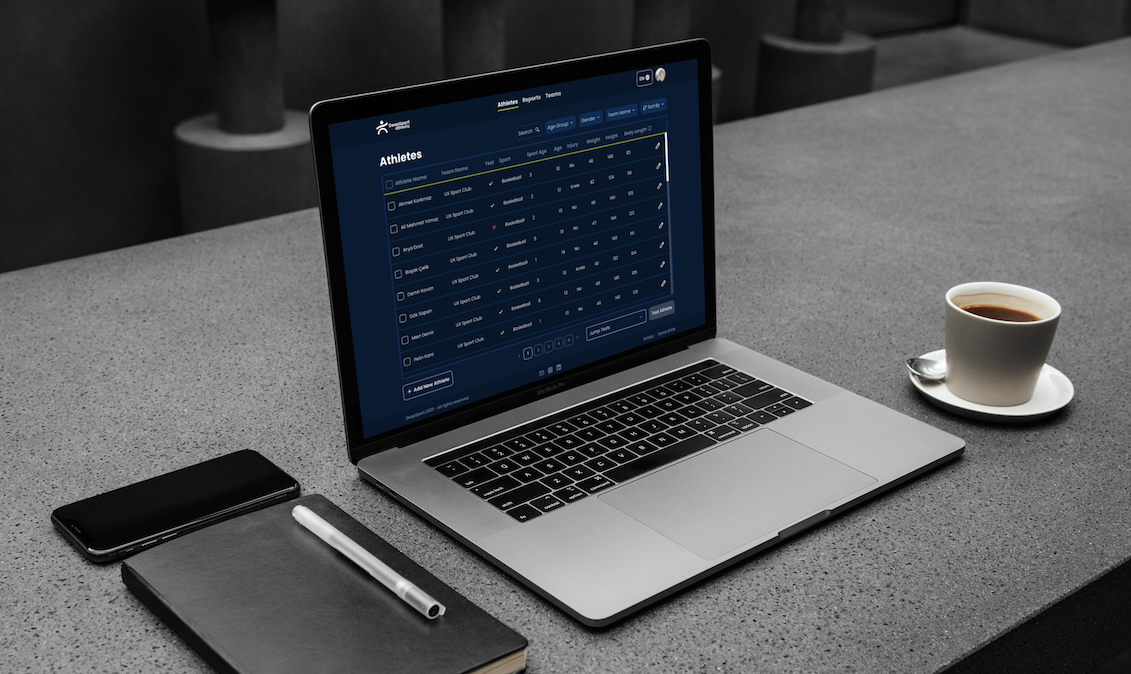
CASE STUDY: DeepSport Athletic
DURATION: 3 Months
Completed in December 2023
ABOUT
DeepSport Athletic offers performance measurement and exercise guidance with AI-supported sports technologies. It can perform performance tests of athletes and students with image processing and posture analysis, eliminating the need for equipment and guidance.
GOAL
Transforming the initial product which is developed by the R&D team for testing the technology into a product suitable for the end user.
SUMMARY
I examined the test version created by the R&D team in the field while the product was being used by real users. I identified some problems according to my observations and suggested possible solutions. With the help of field research, I created the potential user flow. Since the business plan has been developing simultaneously with the product, I quickly adapted the current phase of the product to changing needs. I created a design system, and transformed the user flow into high-fidelity screens.
01 RESEARCH
BACKGROUND
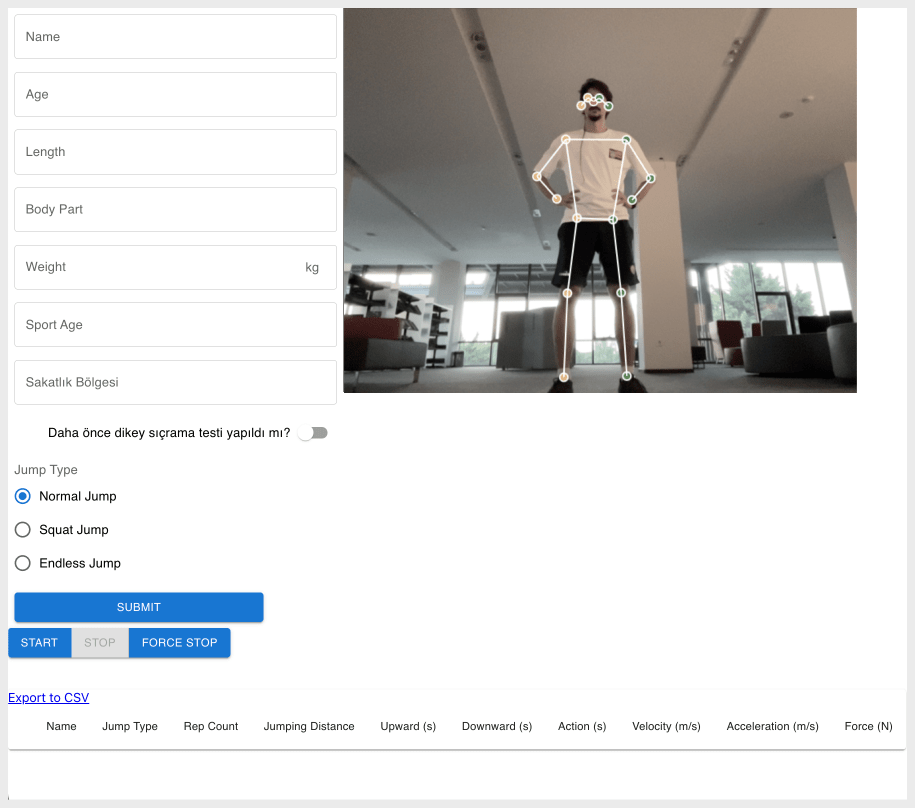
Even though there wasn’t any wholesome product, the initial technology was built by the company’s R&D team. This technology which is built as a one page website, was a small fragment of the user journeys to be built.
FIELD RESEARCH
This was a great opportunity to test the “current testing flow” and have initial thoughts on real users. My role was to observe the usage of the product in the field and ask if there was something that was not clear.
There were two trainers who were pre-educated about the product and tested the young athletes from the sports team. This was an illuminating experience and helped me detect the problems and give me an idea of what the user journey should be.
PRIMARY USER
The sales strategy was aimed at large private schools and sports schools which form the primary user base, although there were potential other users. Therefore, the primary users are the physical training teachers and athletic team coaches at these schools.
02 DEFINE & IDEATE
PROBLEMS & SOLUTIONS
Tests take place in a chaotic environment, generally in a school gym, where there is no proper sound insulation, while the practice of other team members continues. Entering each student’s personal information just before the test not only prolongs the test process but also leads to incorrect entries due to the chaotic environment.
Student information should be entered by the trainer in advance, and even students or their parents should be able to enter the information.
The results were provided in a single document for the entire team. Since the results are just plain data and not an evaluation, they are both limited and too technical for most coaches to interpret.
An individual report should be created for each student. The reports should include not only the raw data but also a comprehensible interpretation of the data.
Sometimes, during testing, due to some systemic problems, the data does not give accurate results, and this situation might be overlooked. When a re-test is performed for control purposes or because a system error is detected, a person has more than one test result which later leads to a confusion about which test should be taken for a consideration.
It is important to notify the trainer if the test results fall outside the range of the base values that were calculated based on the individual being tested. Additionally, after conducting control tests, it is necessary to delete any unwanted results and retain only a single set of test data.
Only trainers have access to test results through the web-app. Families/guardians of the students don’t have access to review these results.
Trainers must have the option to share these reports with parents as needed, either by printing them or sending them electronically.
03 USER FLOW
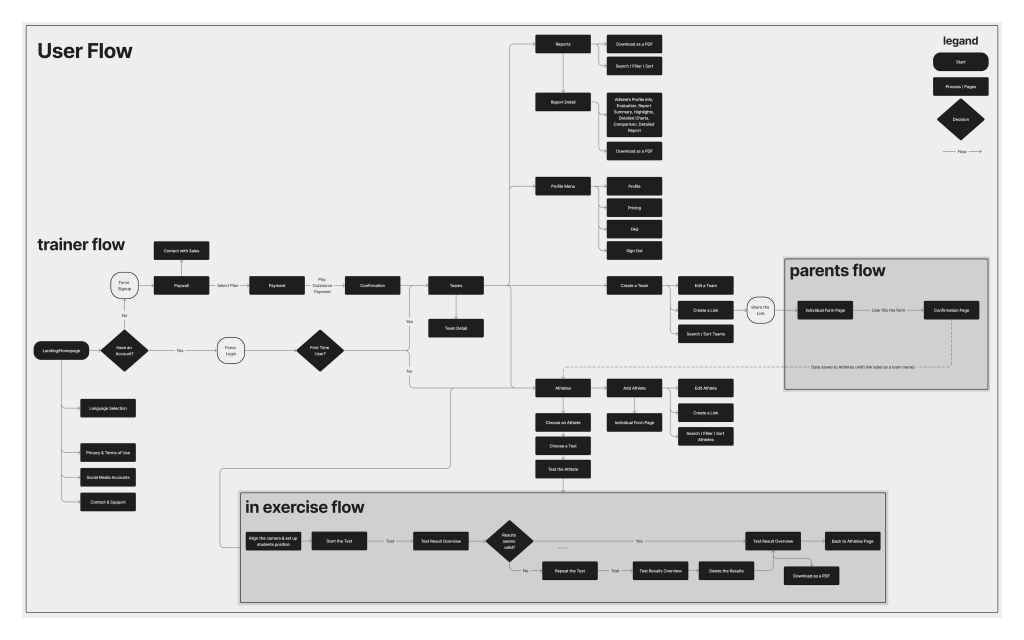
I also defined/listed every need even though some of them are obvious.
“User needs to select a plan to move forward”, “User needs to edit the team information” are some of the examples of the list. This step helped me not to leave out anything and create a better user flow.
04 DESIGN DECISIONS
DESIGN SYSTEM
The color palette was chosen to evoke specific emotions and enhance user experience. The vibrant green represents energy and vitality, symbolizing the dynamic and active nature of fitness. Complemented by the deep navy blue serves as a backdrop, offering a sense of sophistication and professionalism while ensuring content clarity. This palette aims to inspire motivation and convey trustworthiness. I also made sure color combinations passed the contrast tests.
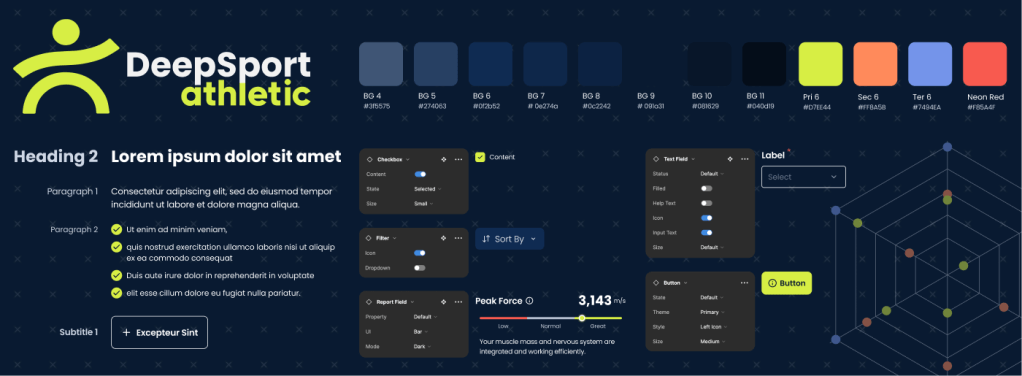
Because the product is generally used with small laptops in the field, I tried to use large elements, avoiding small fonts.
05 FINAL DESIGN
ATHLETE’S FORM
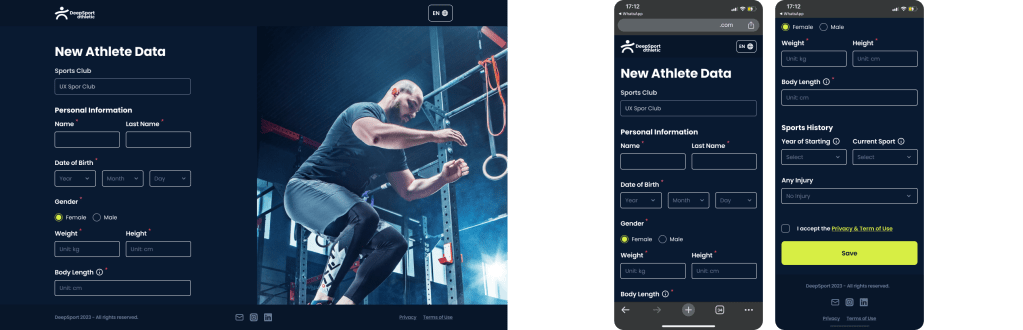
The information required to conduct the tests can be entered by both the coach and parents. The form page has been made mobile-friendly, allowing parents to handle their children’s school-related tasks from their phones.
PLAN SELECTION
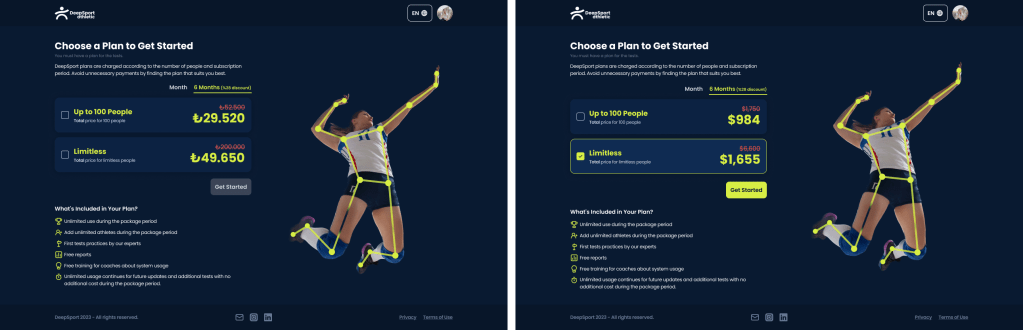
There are two variables in the payment strategy: the number of athletes and the payment period. I have clearly explained these options and their advantages over others without causing confusion.
TEST PROCESS
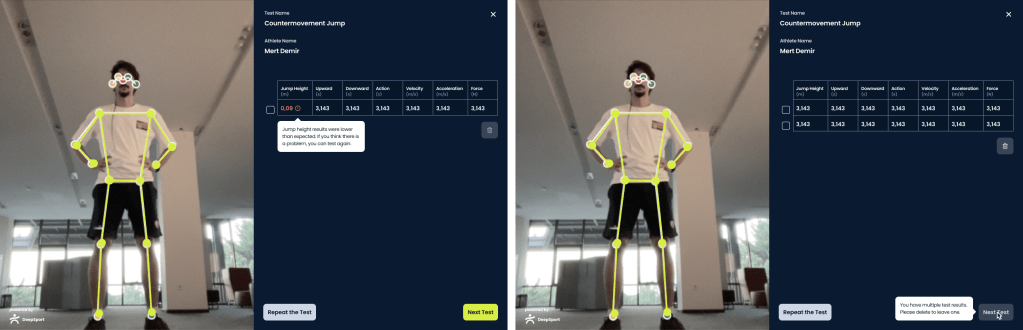
Suspicious values are highlighted amongst the immediate results so that the trainer can spot them more easily. When the test is repeated, the trainer selects the more convenient results to move forward to avoid confusion later.
ATHLETES

I added guidance on how to use the web app for first-time users. Quick editing was necessary for detecting and changing the athlete’s misinformation just before the test.
REPORTS
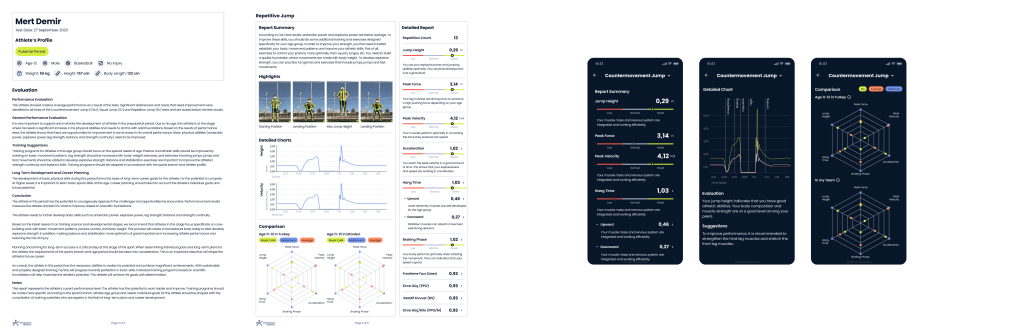
The report summary consists of a comprehensible interpretation of the data. Such as; comparison within the team, evaluation according to performance in the age group for each parameter and suggestions for development, the athlete’s place in the city/district/country averages, etc. Trainers can share this report as a PDF with the parents.
06 FUTURE OPPORTUNITIES
Sales strategy primarily focuses on one-to-one sales, which makes it easier to reach out to users and receive feedback. This presents a great opportunity for user research. To proceed, my next step would be to create a research plan and utilize the users we have already contacted regarding the plan.
In the meantime, it is essential to establish a system that collects analytical data for us to evaluate. While the R&D team continues to create new tests, adapting them to the current web app is also something to work on.
 Hi there!